
Mole Removal
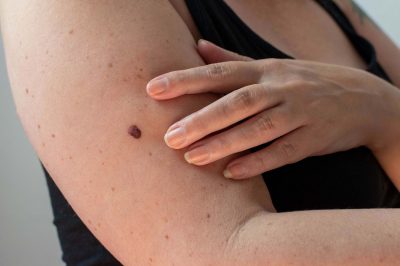
Moles are very common, small, pigmented, round spots on the skin. Most are of no concern, but may be removed if the appearance is not liked by the patient, or they cause trouble such as catching when shaving. A comprehensive examination will take place before removal to ensure there are no outward signs that a mole may be a type of skin cancer called a melanoma. All pigmented lesions removed will need to be sent to a laboratory for a pathological diagnosis.
Price: from £500
Frequently Asked Questions
This depends on the size and location of the mole, but expect the procedure to take 30-40 minutes.
There will usually be a small dressing over the surgical wound. The area will remain numb for an hour or so. When the local anaesthetic wears off the area will be tender. We advise taking paracetamol and/ or ibuprofen to help with the discomfort. Over the first 24 hours the area may become swollen and bruised. This is to be expected and is completely normal. You may be given an antibiotic cream to use for a few days. The stitches may or may not be dissolvable, but we will advise you on which was used and appropriate aftercare.
The potential risks with this type of surgery are pain, bleeding, infection, scar, swelling, numbness and recurrence.
Moles do not usually grow back, but some people are prone to them and you may develop one in another part of your body.
The majority of moles are completely benign (non-cancerous), but sometimes they can turn out to be a malignant melanoma. For this reason we always send any moles we remove for analysis to confirm exactly what it is.