
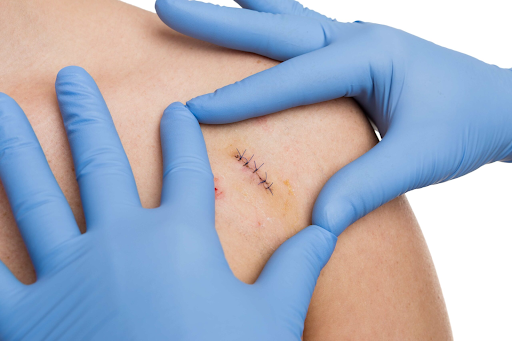
The mechanisms of how the skin heals after surgery are very complex and take time. There are 4 general steps in the healing process:
- 1) Stopping the bleeding (hemostasis). When your skin is cut, scraped, or punctured, you usually start to bleed. Within minutes or even seconds, blood cells start to clump together and clot, protecting the wound and preventing further blood loss. These clots, which turn into scabs as they dry, are created by a type of blood cell called a platelet. The clot also contains a protein called fibrin, which forms a net to hold the clot in place.
- 2) Inflammation. Once the wound is closed with a clot, the blood vessels can open a bit to allow fresh nutrients and oxygen into the wound for healing. Blood-borne oxygen is essential for healing. The right balance of oxygen is also important — too much or too little and the wound won’t heal correctly. Another type of blood cell, a white blood cell called a macrophage, takes on the role of wound protector. This cell fights infection and oversees the repair process. You might see some clear fluid on or around the cut at this time. That is helping clean out the wound. Macrophages also produce chemical messengers, called growth factors, which help repair the wound.
- 3) Growth and rebuilding. Blood cells, including oxygen-rich red blood cells, arrive to help build new tissue. Chemical signals instruct cells to create collagen, which serves as a type of scaffolding, and other tissues to begin the repair process. Occasionally, you see the result of this process as a scar that starts out red and eventually dulls.
- 4) Strengthening. Over time, the new tissue gets stronger. You might notice stretching, itching, and even puckering of the wound as that happens. Within 3 months, the wound is almost as strong in its repair as it was before the trauma. The entire healing process might take a couple of years to complete.